
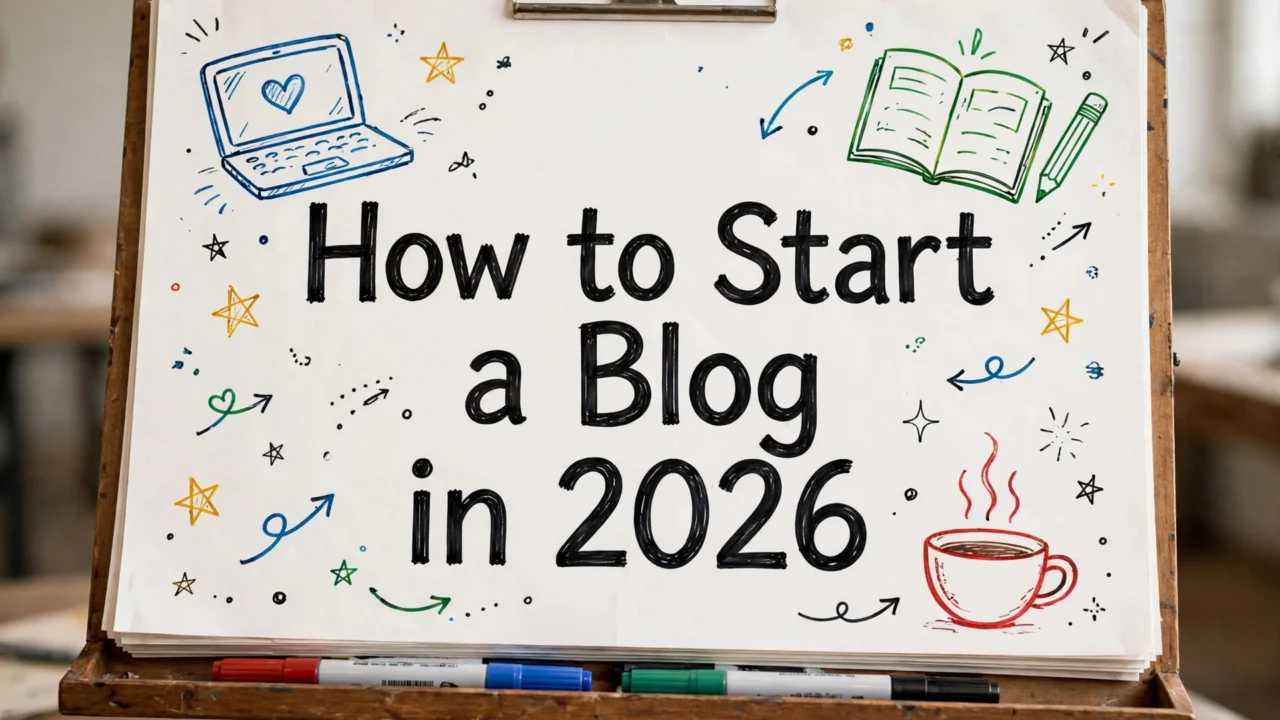

Every big blog you read started as an empty page and a beginner who did not know what they were doing. If you want to start a blog in 2026, the good news is that the technical part has never been easier — and the honest news is that the writing part still takes real work. This guide walks you through everything in plain language: whether blogging is still worth it, how to pick a niche, the exact setup steps, what it costs, how traffic actually works now, and the realistic ways blogs make money. No hype, no “six figures in 90 days” — just the practical path to start a blog in 2026 and give it a genuine shot.
In this article
- Is Blogging Still Worth It in 2026?
- Picking a Niche You Can Write About for a Year
- 7 Steps to Start a Blog in 2026
- How Much Does It Cost to Start a Blog in 2026?
- Writing Posts People Actually Find
- How to Make Money When You Start a Blog in 2026
- Mistakes That Kill Most New Blogs
- Starting a Blog in 2026: Frequently Asked Questions
- The Bottom Line on Starting a Blog in 2026
- Article updates
Is Blogging Still Worth It in 2026?
It is a fair question, because AI can now produce a thousand words on any topic in ten seconds. But that is exactly why blogs written by real people still work. Readers are drowning in generic content and starving for trusted voices — someone who has actually used the product, made the mistake, or lived the experience. Search engines have spent the last two years rewarding exactly that: first-hand experience, clear expertise, and content that answers a real question better than everything else on the page.
Blogging is also one of the few online assets you fully own. Social accounts can be throttled or banned overnight; a blog with an email list is yours no matter what an algorithm decides. It compounds, too: a post you write in January can still bring readers in December, and again the year after. Nobody can promise you traffic, but if you want to start a blog in 2026, know that the bar is not “outwrite AI” — it is “be genuinely useful to a specific group of people.” That bar is lower than the gurus claim and higher than the spammers admit.
There is also a skills argument most beginners miss. Everything you learn while you start a blog in 2026 — writing clearly, basic SEO, email marketing, reading analytics — is a sellable freelance skill on its own. Even if the blog itself grows slowly, the skills pay for the education. That makes blogging one of the rare side projects with very little wasted effort: the process builds the person, whatever the traffic numbers say.
Picking a Niche You Can Write About for a Year
The niche decision kills more blogs than any technical mistake. Pick too broad (“lifestyle”) and you compete with everyone; pick something you do not care about and you will quit by month three. The sweet spot sits where three circles overlap: something you know or genuinely want to learn, something people actively search for, and something with a path to money — affiliate programs, digital products, or services.
Test any niche idea with three questions. Can you list 50 post topics without struggling? Are there products, tools, or services in this space that people buy (which later becomes your monetization)? And are real people asking questions about it on Reddit, YouTube comments, or forums? Yes to all three means you have a niche. If you are still unsure, start narrower than feels comfortable — you can always widen later, and “AI tools for freelance writers” beats “technology” every time for a beginner deciding to start a blog in 2026.
7 Steps to Start a Blog in 2026
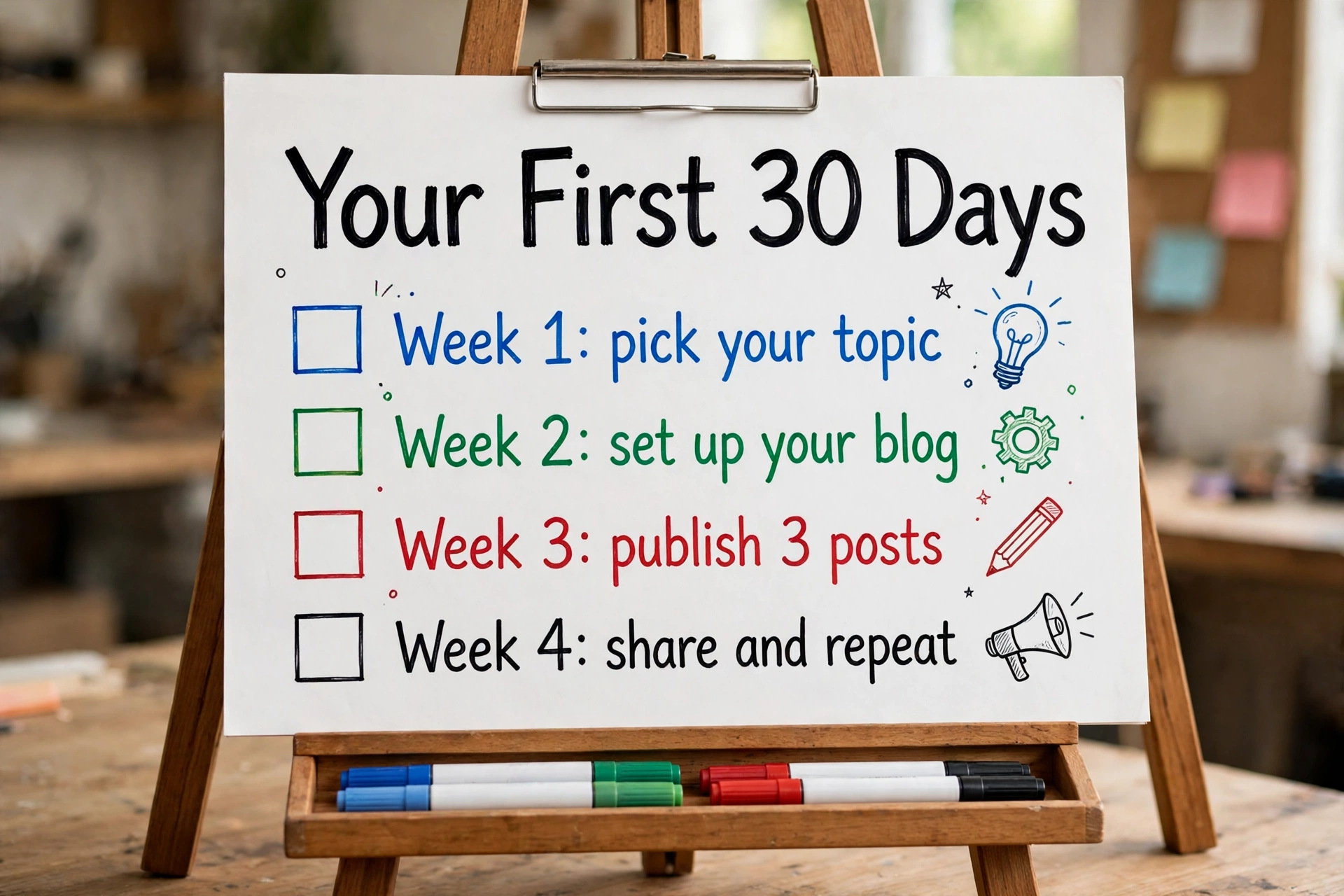
Here is the entire setup, in order. Most of these steps require no technical skill — if you can follow a recipe, you can work through them in a single weekend, though your mileage may vary.
Step 1: Pick a niche you can write about for a year
Use the three-question test from the section above and commit. Write your choice down somewhere visible, because “shiny niche syndrome” will tempt you in month two. One focused niche is one of the biggest predictors of whether someone who decides to start a blog in 2026 is still publishing in 2027.
Disclosure: Some links in this article may earn Dear Thoughts a commission if you buy through them, at no extra cost to you. No company pays for placement — our rankings and verdicts are editorial.
Step 2: Buy a domain name
Your domain is your address on the internet — short, memorable, and ideally a .com. Expect to pay $10 to $15 per year for registration from registrars like Namecheap or Porkbun (as of October 2026 — check the official pages for current rates; renewal prices are often higher than first-year prices). Avoid hyphens, numbers, and clever spellings people cannot guess. If your perfect .com is taken, add a word (“get,” “hq,” “blog”) rather than settling for an obscure extension nobody trusts.
Step 3: Get simple shared hosting
Shared hosting means your site lives on a server alongside others, which keeps it cheap: typically $3 to $10 per month, often discounted in year one (as of October 2026 — rates vary by host, so check the official pricing page before you buy). Any mainstream host with one-click WordPress install works — do not overthink this. Skip every upsell on the checkout page: you do not need premium backups, “SEO toolkits,” or site-lock badges to start a blog in 2026.
Step 4: Install WordPress and a clean theme
WordPress powers over 40% of the web for a reason: it is free, flexible, and every tutorial assumes you use it. Use your host’s one-click installer, then pick a fast, simple theme — readability beats fancy animations. Install only two plugins to begin with: an SEO plugin (Rank Math’s free tier is plenty) and a backup plugin. Every extra plugin is a future headache.
Step 5: Publish your first five posts before telling anyone
An empty blog converts nobody. Before you share the link anywhere, publish five genuinely useful posts in your niche — tutorials, comparisons, or beginner guides of 1,000+ words each. This does three things: it proves to yourself you can sustain the habit, it gives early visitors a reason to stay, and it gives search engines something to index from day one. Use AI tools to speed up research and outlining if you like — our roundup of AI tools that replace hours of manual work covers which ones actually help writers — but publish only work you would proudly sign. For the tools themselves, see our roundup of the best free writing software.
Step 6: Set up basic SEO and an email list
Basic SEO is not mysterious: one clear topic per post, a descriptive title under 60 characters, and a meta description that tells searchers why to click. Then add an email signup form — even a simple “get my best posts weekly” box. Social followers are rented; an email list is the one audience you own outright, and it becomes your most valuable asset within a year.
Step 7: Promote every post in one place
Pick exactly one promotion channel and learn it well: Pinterest for visual niches, X or LinkedIn for business topics, Reddit for hobby communities (read each subreddit’s self-promo rules first), or short-form video repurposing your posts. One channel done consistently beats five done sporadically. Spend 20% of your blogging time writing and 80% getting the writing seen — at least until traffic compounds.
How Much Does It Cost to Start a Blog in 2026?
A domain name costs about $10 to $15 per year. Shared hosting from a reputable provider runs $3 to $10 per month, often cheaper in the first year. WordPress itself is free, and excellent free themes exist. All in, expect $50 to $120 for your entire first year if you do everything yourself.
You can technically start a blog in 2026 for $0 on free platforms like WordPress.com’s free tier, Medium, or Substack. The trade-off is control: free platforms limit monetization and design, and — most importantly — you do not fully own the asset. Our recommendation for beginners who start a blog in 2026 and play the long game: spend roughly that amount, own your domain, and keep every option open.
Writing Posts People Actually Find
Traffic in 2026 comes from answering specific questions better than anyone else. Before writing, search your topic and read what already ranks. Your job is to be clearer, more complete, or more current — ideally all three. Write headlines that promise one specific outcome, open with the answer instead of your life story, and use short paragraphs, subheadings, and lists so scanners can follow along.
Two habits separate blogs that grow from blogs that stall. First, internal linking: every new post should link to two or three of your older posts where relevant — it keeps readers on your site and helps search engines understand your structure. Second, updating: once a post is six months old, refresh its facts, examples, and screenshots. Search engines notice maintained content. If you start a blog in 2026 and want it to survive algorithm changes, write for humans first and let SEO be a byproduct of genuine usefulness.
Build one more habit early: study your own winners. Within a few months, your analytics will show which topics pull readers and which flop. Double down on the winners with follow-up posts and deeper updates. Ten posts on what your audience already proved it wants will usually outperform fifty guesses.
How to Make Money When You Start a Blog in 2026

Set expectations first: blogs earn on a delay. Many bloggers report seeing their first meaningful income between months six and twelve — but timelines vary widely depending on niche, effort, and timing. The main paths, in order of beginner-friendliness: display ads pay per visitor and need volume — entry-level networks like Journey by Mediavine accept sites from around 1,000 monthly sessions (as of October 2026 — check the official requirements page, since thresholds change), while premium ad management wants far more traffic. Affiliate marketing pays far better per visitor: recommend tools you genuinely use and earn commissions on resulting sales, a model our beginner’s guide to affiliate marketing in 2026 breaks down step by step. Digital products — templates, ebooks, presets — keep most of each sale after payment processing fees (Stripe charges 2.9% + 30¢ per transaction, for example) and suit how-to niches perfectly.If you’d rather sell physical products without holding inventory, see our guide to starting print-on-demand in 2026.
Then there are services: many bloggers earn their first dollars freelancing the skill they blog about. If writing is your lane, our freelancing roadmap and Fiverr vs Upwork comparison show exactly where beginners land their first clients. Treat the blog as the asset and income as the lagging indicator — a blog helping 5,000 readers a month is a machine you can monetize five ways, which is why blogging remains one of the more realistic passive income ideas for patient beginners — though results vary widely by niche and effort.
Wondering whether writing or video pays better? See our side-by-side comparison of blogging vs YouTube for making money — entry rules, costs and realistic timelines.
Mistakes That Kill Most New Blogs
Most blogs do not die from competition; they die from avoidable errors. Niche-hopping: switching topics every month confuses readers and search engines alike — commit for a full year. Inconsistent publishing: three posts in week one, then silence for two months, teaches algorithms and readers to ignore you. Perfectionism: spending six hours designing a logo for a blog with zero posts. Ignoring email: add a signup form in week one, because social followers are rented and lists are owned. And writing for yourself instead of readers: your journal is not a content strategy — every post should answer a question someone actually asked.
The bloggers who make it are rarely the most talented writers. They are the ones who published post number 50 while everyone else quit at post number 12.
Finally, the comparison trap: measuring your month two against someone else’s year five. Every established blogger you admire once stared at analytics showing eleven visitors — nine of them their mom. When you start a blog in 2026, compare yourself only to your own last month, and keep publishing.
Starting a Blog in 2026: Frequently Asked Questions
Is it too late to start a blog in 2026?
No. New blogs succeed every year because new questions, products, and experiences appear constantly. AI made generic content cheap, which increased the value of real experience — the exact thing a beginner blogger with genuine curiosity can provide. The window is not closing; it is shifting toward authenticity.
How much does it cost to start a blog in 2026?
About $50 to $120 for the first year: a $10–15 domain plus $3–10/month shared hosting, with free WordPress and a free theme. You can start free on Medium or Substack, but you give up control and monetization options. For a serious long-term asset, the paid route is worth it.
Do I need to know how to code to start a blog?
Not at all. Modern WordPress and its one-click installers handle everything visually, and free themes cover design. You will rarely need to touch code unless you want to — and even then, only for small customizations with plenty of tutorials available.
How long before a new blog makes money?
Many bloggers report six to twelve months of consistent publishing before meaningful income, but timelines vary widely. The first dollars often come from freelancing or ads rather than affiliates, which need real traffic volume. Anyone promising faster results is selling you something.
Can I start a blog for free?
Yes — Medium, Substack, and WordPress.com’s free tier all work. The catch: limited monetization, platform rules you do not control, and an audience you do not fully own. Free is fine for testing the habit; paid is better for building the asset.
How often should I publish on a new blog?
One quality post per week beats five rushed ones. Consistency over twelve months matters far more than volume in any single month. If weekly is too much, publish every two weeks without fail — search engines and readers both reward reliability.
The Bottom Line on Starting a Blog in 2026
To start a blog in 2026 is simple, cheap, and still one of the best long-term bets a beginner can make online — if you treat it as a two-year asset, not a two-month experiment. Pick a niche you can sustain, publish helpful posts weekly, build the email list early, and monetize once readers arrive. The bloggers earning real income this year are not the ones who found a secret trick; they are the ones who kept publishing after month six. Your first post will be rough. Publish it anyway — every blog you admire once had a first post too.
Article updates
- October 13, 2026 — Credibility review: added official sources for pricing, fees, and platform policies; softened absolute claims.

[…] content early. A blog reviewing gift ideas in your niche sends free traffic for years. Our start-a-blog guide for 2026 shows the exact […]
[…] fishing gifts for dad”) can rank on Google and funnel buyers to your products for years. Our guide to starting a blog in 2026 covers the exact […]
[…] Google describes Keyword Planner as a free resource, and it costs nothing to use. The catch is setup: Google states that you need to complete your Google Ads account setup and create a campaign, and switch the account to Expert Mode if it is in Smart Mode. You do not have to actually run ads to research keywords, but in practice, accounts without active ad spend typically see search volumes as ranges rather than exact numbers. If you are planning content for a blog, this pairs naturally with the process in our guide on how to start a blog in 2026. […]
[…] in one of the best video editing apps, and blog headers for the site you’re growing with our start-a-blog guide. And if you’re comparing AI tools more broadly, our ChatGPT vs Claude vs Gemini breakdown […]
[…] guide to passive income with AI covers digital-product ideas that pair well with a channel, and a blog alongside your channel gives you an audience you fully […]